DEFENSE & GOVERNMENT
National Security Systems Assurance
Detect, assess, and remediate geopolitical, foreign influence, cyber, and regulatory risks across AI, Robotics, and Autonomous Systems — from developer infrastructure to operational deployment.
Adversarial Risk Across the Technology Stack
AI-RAS platforms in defense and intelligence operations carry risk well beyond a vulnerability list. Foreign actors, compromised software supply chains, and regulatory exposure create attack surface across software, firmware, hardware, and operations.
Software Supply Chain Compromise
The most overlooked way in is code you didn't write. Trojanized packages, compromised build pipelines, and poisoned updates reach mission systems through the dependencies you trust. Hardware and firmware add exposure beneath it.
Foreign Ownership, Control, or Influence (FOCI)
Hidden foreign equity, board seats held by adversarial entities, and access to source code can give outside parties leverage over how critical systems are built.
Model Poisoning & Adversarial Inputs
Contaminated training data, backdoored model weights, and adversarial inputs can make a model fail on cue, and look like normal error.
Regulatory Non-Compliance
NDAA violations, ITAR/EAR export control breaches, and CMMC gaps can put a program, a contract, or an authorization at risk.

Regulatory & Standards Alignment
DoD and Intelligence Community operations must address NIST SP 800-53 Rev. 5 supply chain and provenance controls, DoDI 8510.01, NDAA Sections 1260H and 889, DFARS cybersecurity requirements, CMMC 2.0 certification standards, and Executive Order 14415 on defense supply chains.
Calls for documenting, monitoring, and maintaining valid provenance of systems, components, and data, including their origin, ownership, and changes. Provenance analysis supports this control.
Identify components, vendors, and dependencies linked to Chinese military companies on the DoD 1260H list, including those operating directly or indirectly in the United States.
Help identify prohibited telecommunications equipment and services from covered foreign entities in system dependencies and supply chain.
Directs the Department of War to develop guidance requiring prime contractors and subcontractors at any tier to map critical supply chains. Multi-tier dependency mapping supports that visibility.
Establishes the cybersecurity Risk Management Framework (RMF) for DoD systems. Provenance and supply chain findings can inform RMF risk assessments and control selection.
Implementation support for advanced cybersecurity practices protecting Controlled Unclassified Information (CUI) in defense industrial base contractors.
Safeguarding covered defense information and cyber incident reporting requirements for DoD contractors and subcontractors.

Systems Assurance Methodology
Fidelitas Defense provides assurance across the full lifecycle of AI-RAS systems — from design and procurement through deployment and operations.
Pre-acquisition assessment identifies hardware provenance gaps, software supply chain risks, developer background concerns, and foreign ownership structures before procurement decisions lock in systemic risk.
Multi-tier dependency analysis tracks components, libraries, and subcontractors to geographic and entity-level attribution, surfacing adversarial access points invisible to traditional software composition analysis tools.
Operational review considers deployed autonomous systems for provenance, configuration, and regulatory exposure under contested operational conditions.
Technology Diligence
Pre-acquisition assessment of hardware provenance, software dependencies, developer backgrounds, and foreign ownership structures.
Supply Chain Mapping
Multi-tier dependency analysis tracking components, libraries, and subcontractors to geographic and entity-level attribution.
Compliance Verification
Map findings to NIST SP 800-53 Rev. 5 provenance controls, DoDI 8510.01, NDAA Sections 1260H and 889, DFARS requirements, CMMC 2.0, and Executive Order 14415 to support compliance review.
Operational Risk Review
Review operational risk for deployed autonomous systems under contested operational conditions, including component provenance and regulatory exposure.
Intelligence Community & DoD Support
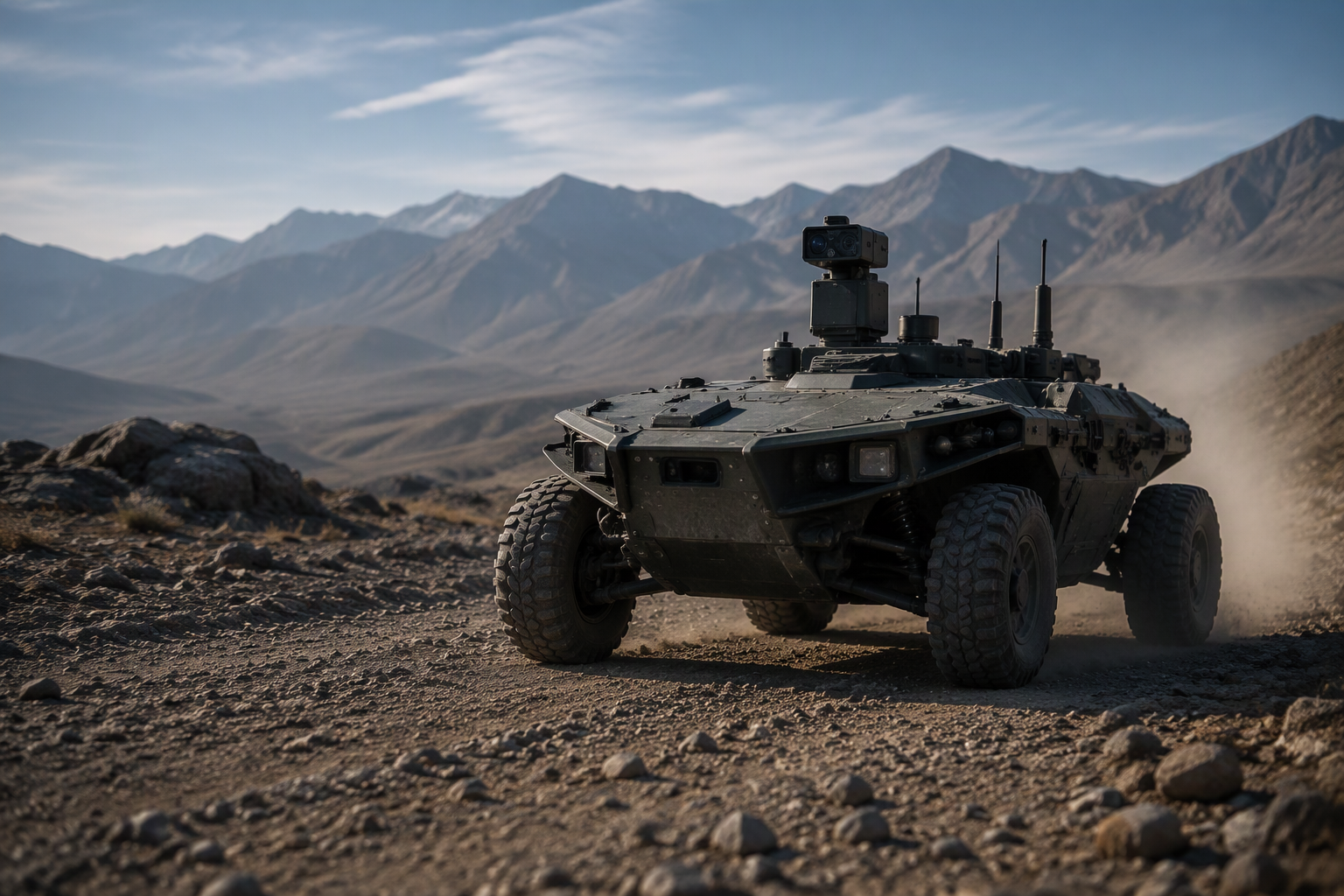
Assessments from Fidelitas Defense are designed for U.S. Intelligence Community, Department of Defense, and Federal agency teams evaluating AI-RAS capabilities for contested operational environments.
Our platform supports assurance for autonomous systems where adversarial compromise could cause serious mission failure — unmanned aerial systems, autonomous ground vehicles, AI-driven threat detection platforms, and decision-support systems in denied-access environments.
Safeguard Mission-Critical Systems
Schedule a technical briefing to discuss AI-RAS threat surfaces, supply chain integrity requirements, and regulatory compliance frameworks for cleared programs.
Request Briefing